
Cookie Preferences

By clicking, you agree to store cookies on your device to enhance navigation, analyze usage, and support marketing. More Info
Thank you! Your submission has been received!
Oops! Something went wrong while submitting the form.


July 21, 2025

New research has uncovered important links between certain blood metabolites and ADHD by using a genetic method called Mendelian randomization. This approach leverages natural genetic differences to help identify which metabolites might actually cause changes in ADHD risk, offering stronger clues than traditional observational studies.
Key Metabolic Pathways Involved:
The study found 42 plasma metabolites with a causal relationship to ADHD. Most fall into two major groups:
Since many metabolites come from dietary sources like proteins and fats this supports the idea that diet could influence metabolic pathways involved in ADHD. However, because the study focused on genetic influences on metabolite levels, it doesn’t directly prove that dietary changes will have the same effects.
Notable Metabolites:
Five metabolites showed bidirectional links with ADHD, meaning genetic risk for ADHD also affects their levels which suggests a complex interaction between brain function and metabolism.
Twelve ADHD-related metabolites are targets of existing drugs or supplements, including:
While these findings highlight biological pathways, they don’t prove that changing diet will directly alter ADHD symptoms. Metabolite levels are shaped by genetics plus environment, lifestyle, and health factors, which require further study.
Conclusion:
This research provides stronger evidence of metabolic pathways involved in ADHD and points to new possibilities for diagnosis and treatment. Future work could explore how diet or drugs might safely adjust these metabolites to help manage ADHD.
While this study strengthens the link between amino acid and fatty acid metabolism and ADHD risk, suggesting that diet could play a role, ultimately more research is still needed before experts could use this research to give specific nutritional advice.
Shi S, Baranova A, Cao H, Zhang F. Exploring causal associations between plasma metabolites and attention-deficit/hyperactivity disorder. BMC Psychiatry. 2025 May 16;25(1):498. doi: 10.1186/s12888-025-06951-9. PMID: 40380147; PMCID: PMC12084988.


A relatively new area of ADHD research has been examining the association between ADHD and eating disorders (i.e., anorexia nervosa, bulimia nervosa, and binge-eating disorder). Nazar and colleagues conducted a systematic review and meta-analysis of extant studies.
They found only twelve studies that assessed the presence of eating disorders among people with ADHD and five that examined the prevalence of ADHD among patients with eating disorders. Although there were few studies, the total number of people studied was large, with 4,013 ADHD cases and 29,404 controls for the first set of studies and 1,044 eating disorder cases and 11,292 controls for the second set of studies. The meta-analyses of these data found that ADHD people had a 3.8-fold increased risk for an eating disorder compared with non-ADHD controls. The level of risk was similar for each of the eating disorders. Consistent with this, their second meta-analysis found that people with eating disorders had a 2.6-fold increased risk for ADHD compared with controls who did not have an eating disorder. The risk for ADHD was highest for those with binge-eating disorder (5.8-fold increased risk compared with controls).
This bidirectional association between ADHD and eating disorders provides converging evidence that this association is real and, given its magnitude, clinically significant. The results were similar for males and females and pediatric and adult populations.
We cannot tell from these data why ADHD is associated with eating disorders. Nazar et al. note that other work implicates both impulsivity and inattention in promoting bulimic symptoms, whereas inattention and hyperactivity are associated with craving. The association may also be due to the neurocognitive deficits of ADHD, which could lead to a distorted sense of self-awareness and body image.
Given that ADHD is also associated with obesity, some obese ADHD patients may have an underlying eating disorder, such as binge-eating, which has been associated with obesity in prospective studies. Also, lisdexamfetamine is FDA-approved for treating both binge eating and ADHD, which suggests the possibility that the two conditions share an underlying etiology involving the dopamine system. We do not know if treating ADHD would reduce the risk for eating disorders, as that hypothesis has not yet been tested. But such an effect would seem likely if ADHD behaviors mediate the association between the two disorders.
If we are to read what we believe on the Internet, dieting can cure many of the ills faced by humans. Much of what is written is true. Changes in dieting can be good for heart disease, diabetes, high blood pressure, and kidney stones to name just a few examples. But what about ADHD? Food elimination diets have been extensively studied for their ability to treat ADHD. They are based on the very reasonable idea that allergies or toxic reactions to foods can have effects on the brain and could lead to ADHD symptoms.
Although the idea is reasonable, it is not such an easy task to figure out what foods might cause allergic reactions that could lead to ADHD symptoms. Some proponents of elimination diets have proposed eliminating a single food, others include multiple foods, and some go as far as to allow only a few foods to be eaten to avoid all potential allergies. Most readers will wonder if such restrictive diets, even if they did work, are feasible. That is certainly a concern for very restrictive diets.
Perhaps the most well-known ADHD diet is the Feingold diet(named after its creator). This diet eliminates artificial food colorings and preservatives that have become so common in the western diet. Some have claimed that the increasing use of colorings and preservatives explains why the prevalence of ADHD is greater in Western countries and has been increasing over time. But those people have it wrong. The prevalence of ADHD is similar around the world and has not been increasing over time. That has been well documented but details must wait for another blog.
The Feingold and other elimination diets have been studied by meta-analysis. This means that someone analyzed several well-controlled trials published by other people. Passing the test of meta-analysis is the strongest test of any treatment effect. When this test is applied to the best studies available, there is evidence that the exclusion of fool colorings helps reduce ADHD symptoms. But more restrictive diets are not effective. So removing artificial food colors seems like a good idea that will help reduce ADHD symptoms. But although such diets ‘work’, they do network very well. On a scale of one to 10where 10 is the best effect, drug therapy scores 9 to 10 but eliminating food colorings scores only 3 or 4. Some patients or parents of patients might want this diet change first in the hopes that it will work well for them. That is a possibility, but if that is your choice, you should not delay the more effective drug treatments for too long in the likely event that eliminating food colorings is not sufficient. You can learn more about elimination diets from Nigg, J. T., and K.Holton (2014). "Restriction and elimination diets in ADHD treatment."Child Adolesc Psychiatr Clin N Am 23(4): 937-953.
Keep in mind that the treatment guidelines from professional organizations point to ADHD drugs as the first-line treatment for ADHD. The only exception is for preschool children where medication is only the first-line treatment for severe ADHD; the guidelines recommend that other preschoolers with ADHD be treated with non-pharmacologic treatments, when available. You can learn more about non-pharmacologic treatments for ADHD from a book I recently edited: Faraone, S. V. &Antshel, K. M. (2014). ADHD: Non-Pharmacologic Interventions. Child AdolescPsychiatr Clin N Am 23, xiii-xiv.

A Swedish-Danish-Dutch team used the Swedish Medical Birth Register to identify the almost 1.7 million individuals born in the country between 1980 and 1995. Then, using the Multi-Generation Register, they identified 341,066 pairs of full siblings and 46,142 pairs of maternal half-siblings, totaling 774,416 individuals.
The team used the National Patient Register to identify diagnoses of ADHD, as well as neurodevelopmental disorders (autism spectrum disorder, developmental disorders, intellectual disability, motor disorders), externalizing psychiatric disorders (oppositional defiant and related disorders, alcohol misuse, drug misuse), and internalizing psychiatric disorders (depression, anxiety disorder, phobias, stress disorders, obsessive-compulsive disorder).
The team found that ADHD was strongly correlated with general psychopathology overall (r =0.67), as well as with the neurodevelopmental (r = 0.75), externalizing (r =0.67), and internalizing (r = 0.67) sub factors.
To tease out the effects of heredity, shared environment, and non-shared environment, a multivariate correlation model was used. Genetic variables were estimated by fixing them to correlate between siblings at their expected average gene sharing (0.5for full siblings, 0.25 for half-siblings). Non-genetic environmental components shared by siblings (such as growing up in the same family) were estimated by fixing them to correlate at 1 across full and half-siblings. Finally, non-shared environmental variables were estimated by fixing them to correlate at zero across all siblings.
This model estimated the heritability of the general psychopathology factor at 49%, with the contribution of the shared environment at 7 percent and the non-shared environment at 44%. After adjusting for the general psychopathology factor, ADHD showed a significant and moderately strong phenotypic correlation with the neurodevelopmental-specific factor (r = 0.43), and a significantly smaller correlation with the externalizing-specific factor (r = 0.25).
For phenotypic correlation between ADHD and the general psychopathology factor, genetics explained 52% of the total correlation, the non-shared environment 39%, and the shared familial environment only 9%. For the phenotypic correlation between ADHD and the neurodevelopmental-specific factor, genetics explained the entire correlation because the other two factors had competing effects that canceled each other out. For the phenotypic correlation between ADHD and the externalizing-specific factor, genetics explained 23% of the correlation, shared environment 22%, and non-shared environment 55%.
The authors concluded that "ADHD is more phenotypically and genetically linked to neurodevelopmental disorders than to externalizing and internalizing disorders, after accounting for a general psychopathology factor. ... After accounting for the general psychopathology factor, the correlation between ADHD and the neurodevelopmental-specific factor remained moderately strong, and was largely genetic in origin, suggesting substantial unique sharing of biological mechanisms among disorders. In contrast, the correlation between ADHD and the externalizing-specific factor was much smaller and was largely explained by-shared environmental effects. Lastly, the correlation between ADHD and the internalizing subfactor was almost entirely explained by the general psychopathology factor. This finding suggests that the comorbidity of ADHD and internalizing disorders are largely due to shared genetic effects and non-shared environmental influences that have effects on general psychopathology."

Methylphenidate is an effective treatment for ADHD in adults who also have bipolar disorder (BD), but it carries a potential risk of triggering manic episodes. Current guidelines therefore recommend using it only alongside mood-stabilizing medication. A new study using French nationwide claims data sought to test and extend those recommendations with greater statistical power than previous research.
The study built on findings by Viktorin et al. (2017), who observed that adults with BD not taking mood stabilizers had more than a sixfold higher risk of manic events (defined as hospitalization for mania or a new antimanic prescription) within six months of starting methylphenidate. Patients on mood-stabilizing treatment, by contrast, showed nearly half the baseline risk in the first three months. Those findings were limited, however, by small event counts (fewer than 61 manic episodes) and an effect that did not persist beyond the initial three-month window.
To build on this, researchers drew on the French National Health Data System (which is a claims database covering more than 60 million people) spanning 2008 to 2024. The final sample included 6,022 adults with BD (56% women) who had started methylphenidate. Using a self-controlled design, the study compared each patient's rate of manic events in the six months before their first methylphenidate prescription with the rate in the six months after, effectively eliminating stable individual differences as a confound.
Patients were classified as receiving continuous mood-stabilizing treatment if they had been dispensed at least two courses of specific antipsychotics (aripiprazole, olanzapine, or quetiapine) or mood stabilizers (lithium or valproate) in the nine months before starting methylphenidate, including at least one dispensation in the final six months of that window.
The results largely confirmed the earlier findings. Among the 2,745 patients not on mood stabilizers, the rate of inpatient mania diagnosis was 5.1 times higher in the first three months after starting methylphenidate, though this elevation fell to a non-significant level over the subsequent three months. Patients receiving continuous mood-stabilizing treatment showed no statistically significant change in mania risk across the full six-month post-initiation period. A formulation-specific pattern also emerged: patients without mood-stabilizing treatment had a 2.5-fold higher risk associated with extended-release methylphenidate, while no significant risk increase was seen with the immediate-release formulation or in treated patients regardless of formulation.
The authors conclude that methylphenidate at doses below 30 mg does not appear to elevate manic relapse risk when prescribed alongside mood stabilizers. The elevated risk seen in untreated patients, particularly with extended-release formulations, must be interpreted cautiously, given limited statistical power and the likelihood that it partly reflects the natural fluctuation of manic relapse over time. The authors flag this as an inherent limitation of self-controlled survival analyses when studying drug-induced mania, where temporal trends in the underlying condition can be difficult to disentangle from treatment effects.
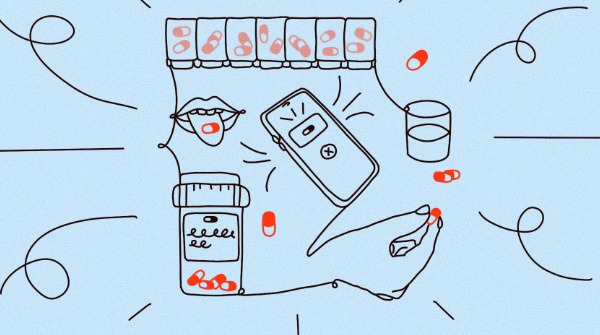
The FDA has approved a new once-daily pill called centanafadine (trade name SIMTRIYO®). Approved for adults and kids aged 6 and older (weighing at least 44 lbs / 20 kg), centanafadine is a new category of ADHD treatment that aims to give fast results with fewer of the downsides of traditional stimulants.
To understand why centanafadine is unique among medications for ADHD, it helps to look at how ADHD brain chemistry works:
Stimulants like Ritalin and Adderall work mainly in the dopamine system. Nonstimulants like atomoxetine, viloxazine, clonidine and guanfacine work mainly on the norepinephrine system. Centanafadine is the first drug in a new class called NDSRIs (Norepinephrine, Dopamine, and Serotonin Reuptake Inhibitors). We can describe its effects as follows:
What Did Clinical Trials Show?
The FDA approved centanafadine based on studies involving thousands of adults, teens, and children. Here are the key findings:
Centanafadine showed some improvement in ADHD symptoms within the very first week of taking it although a full effect takes about six weeks.
In adult trials, taking 200 mg or 400 mg daily led to significant improvements in real-world skills:
In trials with children (ages 6–12) and teens (ages 13–17), centanafadine significantly reduced core ADHD symptoms like hyperactivity, impulsivity, and lack of focus compared to a placebo.
About 30% to 40% of adults with ADHD also suffer from anxiety. Traditional stimulants can make anxiety worse. In a trial specifically designed for adults dealing with both ADHD and anxiety, centanafadine effectively treated ADHD symptoms without firing up their anxiety, which might be due to its serotonin boost.
Does Centanafadine have Side Effects?
While Centanafadine was well-tolerated by most people in studies, like any prescription medication, it comes with important safety guidelines.
Prescribing Warnings:
Common Side Effects:
Other Warnings:
The Bottom Line
Overall, centanafadine is a new step forward in how we treat ADHD. Because it acts differently in the brain than traditional treatments, patients who struggle with stimulant-related anxiety or side effects may find it useful to explore with their doctor.

A landmark nationwide study from South Korea has uncovered a significant link between prenatal exposure to air pollution — specifically nitrogen dioxide (NO2) — and an increased risk of ADHD in children.
While researchers have long suspected that air pollutants interfere with fetal brain development through inflammation and oxidative stress, this study is one of the largest and most comprehensive of its kind, following nearly 1.5 million births for up to 13 years.
Why South Korea?
South Korea provided a unique countrywide “laboratory” for this research due to two key infrastructure strengths:
Key Findings: The “Smoking Gun” of NO2
While the study looked at several pollutants, nitrogen dioxide — a byproduct of fossil fuel combustion in cars and power plants — emerged as the primary concern.
Pollutant
Association with ADHD Risk
Nitrogen Dioxide (NO2)
Strongest Link: Every 1-ppb (part-per-billion) increase in exposure linked to a 22% rise in risk.
Sulfur Dioxide (SO2)
Minimal Link: Only a slight 4% increase per ppb.
Ozone (O3) carbon monoxide (CO), & particulates
No significant association was found.
The scale of the NO2 risk is particularly striking. Over the typical range of exposure levels found in the study (an interquartile range of 13 ppb), the data suggest a threefold increase in ADHD risk for children in the highest-exposure groups compared to the lowest.
Accounting for Other Factors
To ensure the results weren’t skewed by other variables, the researchers controlled for a wide range of confounders including:
The authors emphasized the strong association between maternal nitrogen dioxide exposure and ADHD, while also noting the small but significant association with sulfur dioxide.
The Take-Away: A New Frontier for Public Health
Historically, air quality laws have been designed to protect our lungs and hearts. However, this study adds to a growing body of evidence suggesting that the brain is likewise vulnerable.
In a commentary on the findings, expert George Ayoub argued that “neurodevelopment should be explicitly considered” when governments perform cost-benefit analyses on air quality regulation. My view is a bit different. The association is intriguing but the study does not establish cause and effect. Many statistically significant environmental risk associations for neurodevelopmental disorders have disappeared after controlling for maternal risk for ADHD. I hope this research team will do those analyses if feasible.


_logo%201.svg)
